
Ever look at your credit card bill at the end of the month and think, “How on earth did we spend this much? We didn’t even buy anything!”?
Sure, sometimes it’s an unbudgeted emergency, like your two-year-old slamming the fridge door completely off its hinges. But usually, that’s not what’s draining your account.
Nobody willingly pays double for the exact same service, yet companies literally bank on us being too busy or distracted to notice. They profit off what we call the “Stupid Tax”, the silent expenses, missed discounts, and lazy default settings quietly eating away at our budget.
Plugging these leaks isn’t about suffering or penny-pinching; it’s about stopping the waste so you actually have money for the things that matter to your family. As you likely know, cutting costs is literally our thing and we have a whole collection of posts with countless ways to save. This post is a roundup of some of our favorites.
- Look for loss leaders. Supermarkets tend to advertise massive sales on certain items just to get you in the door, in the hopes you’ll buy other stuff while you’re there. Come in, stock up on those items only, and leave. Sometimes said sales will only kick in after you spend 100 shekels in the store. If that is the case, check out “Pikuach” below.
- Stick to Pikuach. For historical reasons, Israel has a list of price-controlled grocery items that cost the same (or less) at every store, which includes certain types of milk, eggs, bread, hard cheeses, and soft cheeses. This takes some getting used to, so you need to pay attention. For example, 1% and 3% milk are price-controlled. 2% and 4% are not and can sometimes cost 50% more. Regular eggs are price-controlled, while free-range or other special eggs are not.
- Join consumer discount clubs. Available through credit cards, municipal programs, reserve duty, and trade unions. These are one of the easiest ways to avoid paying full price on everything from summer attractions to supermarket vouchers. Before booking any outing or buying tickets, always check for discounts first. Just remember our golden rule: buying something on sale only saves you money if you were planning on buying it in the first place!
- Don’t stay loyal. Often, service providers will give you an “introductory” deal for a year. What they don’t tell you is that you can often extend this special deal just by asking nicely. If they refuse, change providers. We recently did this when our cell phone company announced it was raising its rates (and we got our daughter a dumbphone around the same time). We now pay less for three lines than we paid for two lines with our previous provider.
- Avoid overdraft. 40% of households in Israel are in overdraft (and it’s even higher in the United States). The longer and deeper you are in the red, the more your bank will charge you – often 10% or more per year. Get back in the black and keep your money.
- Don’t pay convenience tax. Ordering last-minute groceries on Wolt, grabbing snacks at gas station stores (like Yellow), shopping at 24/7 city markets, or running to your local makolet downstairs for full meals all carry massive markups. Convenience is fine in a pinch, but treating neighborhood convenience stores as your main pantry quietly drains hundreds of shekels a month. Plan ahead and leave convenience runs for actual emergencies.
- Consider the pink tax. Have you noticed that toiletries and other products targeting women tend to cost more? This includes razors, shampoo, and deodorant, just to name a few. We’re not saying you need to smell like a man (if you don’t want to), but don’t feel the need to pay more for the same product because of your gender.
- Pay your bills on time. Paying utility or other bills late often incurs a late fee of at least 4%. The best way to guarantee you never miss a bill is to automate payments (known in Hebrew as הוראת קבע). Make sure to cancel the standing order when you move or discontinue the service!
- Renew your passport in the winter. Is your Israeli passport about to expire? Renewing it between November and February will save you about 40%. Make sure to pay online when you book the appointment. Passports cost more when you pay on the spot.
- Update your Rav Kav profile. Public transport discounts aren’t applied automatically. You have to actively claim them. Beyond the obvious profiles for kids, students, and seniors, many people completely miss out on geographic discounts. If you live in an eligible peripheral area or specific municipality, you might qualify for a reduced transit rate. Make sure your profile and address are updated. Skipping this quick administrative step means quietly paying full adult fare on every bus and train ride. While you’re at it, consider ditching the Rav Kav entirely and switching to a public transportation app, which can also save you money each month.
- Holiday Inflation. Holiday shopping season brings endless promises of massive savings, but store pricing tricks are everywhere. Some retailers might bump up base prices by 30% right before a major holiday just to advertise a flashy “25% off” sale. Because of how the math works, that “discounted” price is actually the same or higher than what the item cost a month ago! Don’t trust percentage signs blindly. Track baseline prices on regular items a few weeks early so you can spot genuine deals.

- Kill the “1-Click” Temptation. Unsubscribe from store newsletters, delete shopping apps from your phone, and clear saved credit card details from browser autofill. When you are not constantly bombarded with promotional alerts, the temptation drops instantly. More importantly, when you actually have to get up, grab your wallet, and type in sixteen digits by hand, that tiny delay gives your brain time to pause and ask: “Do we actually need this, or are we just bored?”.
Pro Tip for Gmail Users: You do not even have to open each email and hunt through fine print at the bottom to stop the spam. Gmail now has a “Manage subscriptions” tab right in the left menu (or the quick “Unsubscribe” link right next to the sender’s name at the top of the message). You can clean out dozens of promotional lists in just a few clicks.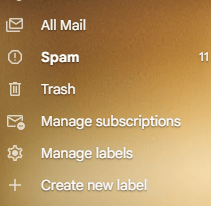
Some of these fixes take literally two minutes over WhatsApp with customer service, while others take a little more time and administrative patience. But being wiser the Fionist way is not about working harder or agonizing over every single penny. It is about taking action once or twice, fixing your default settings, and being aware of what’s going on so you can set it and forget it.
Getting on top of your finances doesn’t happen overnight. But by taking it step-by-step and plugging these silent leaks, you’re effectively giving yourself a raise, without having to earn a single extra shekel.
Which 1 or 2 of these can you take care of in the next two weeks?
Like what you see here? Subscribe so you never miss a post.


Leave a Reply